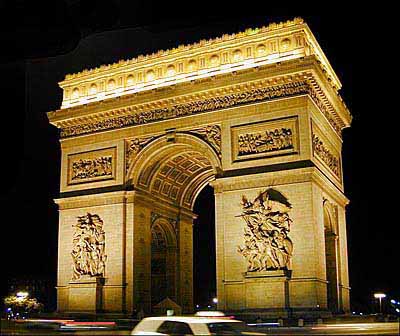
Last Thursday was my college's Annual Day, a sort of coming out party for repressed medical students. The theme of the night was Rendezvous in Paris, and my first reaction was WTF? The hall was decorated magnificently, but everywhere were masks! MASKS?! Totally the wrong theme. I was saying things like 'You can't just paste an Eiffel Tower and suddenly pretend everything's French!' and 'This is a VENETIAN MASQUERADE!'
The night itself was a bore, but it was probably because out of five hours I warmed my seat with my luscious behind - which was wrapped in a delicious black mesh cardigan - four hours were spent watching the same thing, and three hours were spent watching the same people - the same PERSON, in fact - strutting ass on stage. There were some couple of lovely performances: my old Biochem lecturer, who was the tiniest person in campus, who almost passed out on stage from twirling a Bharatanatyam movement; a crazy but totally awesome Kabuki-style show of a Jedi duel; and my juniors' frightening batch cheer, which almost made me giggle in the middle of the hall from sheer testosterone overload.
Other things were nice the first five minutes, then became annoying, then I didn't know what happened because I was out to the loo. Two fashion shows, in which the most original thing was to pair up a handsome boy with er, a handsome lady, clearly a sugar mummy in utero; an ass-long show about contraception - when the funniest thing in the show is supposed to be a jab at your favorite Myanmar person, then it's TROUBLE - and some singing (which featured ZERO French song) which was nice for a couple of minutes then dragged.
Which was my complaint for the show as a whole: it dragged like my ass after a full day of Muar posting. Some of us really need to be hit in the heads with the words 'Less is FUCKING BEST'. I haven't seriously been annoyed at a show since 2002, when my well-meaning teacher brought me to a Malay theatre - got box seats too - and I promptly fell asleep after the actors' third attempt at being dramatic just left me cringing for my bed.
And the food. It was advertised as Western, but the only Western thing on the menu is a drag king pushing his busted face, frilly grey POLKA DOTS shirt and vest while shouting 'Chicken to your left, lamb to your right'. Lamb? So what? I don't even eat the fucking shit anyway, reminded me of my least favourite aunt, who ordered off menus like rich people. I detest rich people, so there. And I understand there's six hundred plus of us to serve, but can waiters at least pretend to be nice? It's a sad thing when the one nice waiter was actually an outside people.
I shouldn't be too hard: clearly a lot of work - but not a lot of thought, hehe - had gone into making the 2012 Melaka-Manipal Medical College (Melaka) Annual Night, Theme: Rendezvous in Frogging Paris. The reason I'm being such a cunt with my hard-working friends is because I won the Poetry award, second place. I fucking wrote the damn thing on New Year's Eve, took about five hours, then another hour to rearrange the words just so the stresses and the rhythm would fall just right (being trained in music does help). I was so happy coming to the event, expecting at least a cert for my hard work, when suddenly cold hard truth pocked me in the ass without lube:
The night itself was a bore, but it was probably because out of five hours I warmed my seat with my luscious behind - which was wrapped in a delicious black mesh cardigan - four hours were spent watching the same thing, and three hours were spent watching the same people - the same PERSON, in fact - strutting ass on stage. There were some couple of lovely performances: my old Biochem lecturer, who was the tiniest person in campus, who almost passed out on stage from twirling a Bharatanatyam movement; a crazy but totally awesome Kabuki-style show of a Jedi duel; and my juniors' frightening batch cheer, which almost made me giggle in the middle of the hall from sheer testosterone overload.
Other things were nice the first five minutes, then became annoying, then I didn't know what happened because I was out to the loo. Two fashion shows, in which the most original thing was to pair up a handsome boy with er, a handsome lady, clearly a sugar mummy in utero; an ass-long show about contraception - when the funniest thing in the show is supposed to be a jab at your favorite Myanmar person, then it's TROUBLE - and some singing (which featured ZERO French song) which was nice for a couple of minutes then dragged.
Which was my complaint for the show as a whole: it dragged like my ass after a full day of Muar posting. Some of us really need to be hit in the heads with the words 'Less is FUCKING BEST'. I haven't seriously been annoyed at a show since 2002, when my well-meaning teacher brought me to a Malay theatre - got box seats too - and I promptly fell asleep after the actors' third attempt at being dramatic just left me cringing for my bed.
And the food. It was advertised as Western, but the only Western thing on the menu is a drag king pushing his busted face, frilly grey POLKA DOTS shirt and vest while shouting 'Chicken to your left, lamb to your right'. Lamb? So what? I don't even eat the fucking shit anyway, reminded me of my least favourite aunt, who ordered off menus like rich people. I detest rich people, so there. And I understand there's six hundred plus of us to serve, but can waiters at least pretend to be nice? It's a sad thing when the one nice waiter was actually an outside people.
I shouldn't be too hard: clearly a lot of work - but not a lot of thought, hehe - had gone into making the 2012 Melaka-Manipal Medical College (Melaka) Annual Night, Theme: Rendezvous in Frogging Paris. The reason I'm being such a cunt with my hard-working friends is because I won the Poetry award, second place. I fucking wrote the damn thing on New Year's Eve, took about five hours, then another hour to rearrange the words just so the stresses and the rhythm would fall just right (being trained in music does help). I was so happy coming to the event, expecting at least a cert for my hard work, when suddenly cold hard truth pocked me in the ass without lube:
There's only present for the first winner.
I mean, there wasn't even a cert! Fuck that! And the winner was this Indian lady, who I'm sure was sweet and nice et cetera et cetera, but her entry: no. She used the crying clown theme, you know, Pagliaccio shit, and while it was nice to read it dragged. One should be able to encompass an emotion in a single sentence, not went on and on with it like a politician. Unless you're Anne Rice, of course (who looks amazing and has a new book coming out!).
Ah well. I had huge ass fun bitching about everything with my two Kelantanese chaps - and I'm telling you, if you want to be a nasty sounding board you better do it with a Kelantan man, they may be shy at first but their jabs will leave you reeling for days. We all got a five-day long weekend as reward for 'hard' work - hard to watch, hard to sit in, hard to chew, hard to swallow - and I promptly sat down to write Opus 37.
Not really. For the first three days I lazed around - when money's tight the only good thing you can buy is ideas, and I think best when I'm asleep - and did a few homeworks, read my Davidson (that's a huge bible of Medicine) and on 1 a.m. Sunday morning, started writing the recitativo-aria. I've always wanted to write a rage aria, like Elettra's D'Oreste, d'Ajace, or Esclarmonde's Regarde-les, ces yeux purs, you know, the elegant type of rage. I wrote the introductory recitativo in just one hour - I had two Nescafes, don't judge - in the style of Mozart.
I was quite befuddled how to proceed. I love Bellini's cantilena style, and it would accommodate the soprano better, but I also like Verdi's style. To be fair, both are almost interchangeable (especially early Verdi), so I went on and wrote the aria proper. Of course, the second stanza onwards was all purely me, Isyamian writing, if I may call it so, where there's long ass phrases over simple accompaniment, because I want to hear the singer sing the beautiful words which I've written. I also tagged a 'rising rage' figure, a transformed sort of minor scale, which I've used earlier in my Lieder für Eine Dorfschönheit (which currently I'm putting on the back-burner, just one more song to complete the cycle).
The good thing is the highest note in this recitativo-aria is A (there's a B but it's more of a punched type so it can almost be scream-shriek tone, and it comes quite late so the singer's warmed up already) so it's quite commercial. I'm labelling it Gran scena per soprano, but it's really a concert work for female voices who sing comfortably from A4 to F#5, have huge tops and of course, legato for days. The parole is of course moi, it's based on a story I wrote in high school about a princess who was libelled by her ex, sort of Princess Di (whom my mom used to be obsessed about) vs James Hewitt (whom I used to be obsessed about) story. Basically, it says 'Come Judgement Day (or 2012, depending whom you ask), I'll still be ripping you a new one.'
RECITATIVO:
Durjana! pendusta!
Mana Safir*, keris pusaka?
mana Zafir*, lembing berharga?
buat membersih maruah tercela.
Mana kan ku taruh muka,
setelah dihina begitu rupa.
ARIA:
Bertiuplah angin sangkakala,
bergegarlah langit dan angkasa
Menyerakkan bumi dan kejora
mengumpulkan serata manusia.
Tiba hujung masa, hujung dunia fana,
mendengar seruan bergema bertanya:
"Siapa hamba masih berdendam,
mahu menuntut perhutangan?"
Aku kan datang, menapak tangan
meratap, menyumpah, dan meminta
akan melangsaikan hutang
dendam kesumat seribu zaman.
Dalam gelap selepas dunia
Masih kan ku carimu, celaka!
Dengarlah, bumi dan angkasa
Padam dendam dengan darah!
*Safir means 'Grand Ambassador'; Zafir means 'Victorious'. I know, nerdy names for weapons, but whatever. I was also surprised when I found I have to write in taruh, which is basically Brunei (my birth tongue - as I read that again it sounded dirty to my ears, my birth tongue, hehe) for 'to put' or 'to place', for the sake of the melodic and consonant flow.
UPDATE: I have finished the orchestral version of it, the first version of which can be viewed here. The second version is longer by a minute, with additional recitative work and GLORIOUS solos for clarinet and flute. I have also changed the indication, now it's formally a 'concert aria for female voice', because the highest note is B and that note is a good money note for mezzos too.
Ah well. I had huge ass fun bitching about everything with my two Kelantanese chaps - and I'm telling you, if you want to be a nasty sounding board you better do it with a Kelantan man, they may be shy at first but their jabs will leave you reeling for days. We all got a five-day long weekend as reward for 'hard' work - hard to watch, hard to sit in, hard to chew, hard to swallow - and I promptly sat down to write Opus 37.
Not really. For the first three days I lazed around - when money's tight the only good thing you can buy is ideas, and I think best when I'm asleep - and did a few homeworks, read my Davidson (that's a huge bible of Medicine) and on 1 a.m. Sunday morning, started writing the recitativo-aria. I've always wanted to write a rage aria, like Elettra's D'Oreste, d'Ajace, or Esclarmonde's Regarde-les, ces yeux purs, you know, the elegant type of rage. I wrote the introductory recitativo in just one hour - I had two Nescafes, don't judge - in the style of Mozart.
I was quite befuddled how to proceed. I love Bellini's cantilena style, and it would accommodate the soprano better, but I also like Verdi's style. To be fair, both are almost interchangeable (especially early Verdi), so I went on and wrote the aria proper. Of course, the second stanza onwards was all purely me, Isyamian writing, if I may call it so, where there's long ass phrases over simple accompaniment, because I want to hear the singer sing the beautiful words which I've written. I also tagged a 'rising rage' figure, a transformed sort of minor scale, which I've used earlier in my Lieder für Eine Dorfschönheit (which currently I'm putting on the back-burner, just one more song to complete the cycle).
The good thing is the highest note in this recitativo-aria is A (there's a B but it's more of a punched type so it can almost be scream-shriek tone, and it comes quite late so the singer's warmed up already) so it's quite commercial. I'm labelling it Gran scena per soprano, but it's really a concert work for female voices who sing comfortably from A4 to F#5, have huge tops and of course, legato for days. The parole is of course moi, it's based on a story I wrote in high school about a princess who was libelled by her ex, sort of Princess Di (whom my mom used to be obsessed about) vs James Hewitt (whom I used to be obsessed about) story. Basically, it says 'Come Judgement Day (or 2012, depending whom you ask), I'll still be ripping you a new one.'
RECITATIVO:
Durjana! pendusta!
Mana Safir*, keris pusaka?
mana Zafir*, lembing berharga?
buat membersih maruah tercela.
Mana kan ku taruh muka,
setelah dihina begitu rupa.
ARIA:
Bertiuplah angin sangkakala,
bergegarlah langit dan angkasa
Menyerakkan bumi dan kejora
mengumpulkan serata manusia.
Tiba hujung masa, hujung dunia fana,
mendengar seruan bergema bertanya:
"Siapa hamba masih berdendam,
mahu menuntut perhutangan?"
Aku kan datang, menapak tangan
meratap, menyumpah, dan meminta
akan melangsaikan hutang
dendam kesumat seribu zaman.
Dalam gelap selepas dunia
Masih kan ku carimu, celaka!
Dengarlah, bumi dan angkasa
Padam dendam dengan darah!
*Safir means 'Grand Ambassador'; Zafir means 'Victorious'. I know, nerdy names for weapons, but whatever. I was also surprised when I found I have to write in taruh, which is basically Brunei (my birth tongue - as I read that again it sounded dirty to my ears, my birth tongue, hehe) for 'to put' or 'to place', for the sake of the melodic and consonant flow.
UPDATE: I have finished the orchestral version of it, the first version of which can be viewed here. The second version is longer by a minute, with additional recitative work and GLORIOUS solos for clarinet and flute. I have also changed the indication, now it's formally a 'concert aria for female voice', because the highest note is B and that note is a good money note for mezzos too.