Showing posts with label vocal pedagogy. Show all posts

Monday, November 12, 2012

#72 the dilemma

I'm still alive, duh.

For the past few ages I've been away, first to face one of the most important exams of my life - the fourth year exit exam of medic school. I passed (thank God!), although there were certain things which I could have done better. There was the practical exams (the OSCEs) in which I thoroughly bombed the stations for Orthopaedics and Paediatrics, the former because I was a klutz with no sense of organisation and the latter because it was the first-station jitters. The MCQs being MCQs (I forgot the exact number of questions already but it was certainly more than 120) made me so tired and cold and subsequently sleepy (damn hall air-conds!). The long case was fun, though. I got an easy case, CCF with diabetic complications, the patient was very cool, the examiners were helpful because God knows I was babbling like my life depended on it. Case in point: I couldn't even get the word "BUSE/CREAT" out for five minutes (they were asking for a lab investigation for kidney function), the examiners had to twirl around and around to get it out of me, and they looked intensely relieved the moment it rolled out of my tongue I couldn't help mumbling "I'm sorry".

Then, I went for a LONG-DESERVED HOLIDAY and an awesome elective posting in the Emergency Department of Queen Elizabeth Hospital 1 Kota Kinabalu. The department people was awesome, and our supervisor was one really cool guy who made 'disaster' sounds like an attractive word. I stayed in God-forsaken Petagas, which turned out to be quite a charming suburb area, and went back to Bongawan for the weekends on the NEW TRAIN! NEW TRAIN! NEW TRAIN!

The sea view from the train, about fifteen minutes away from my home.
These two are so cute, but they're probably brothers.
Holiday activity: searching for rubber tree seeds! And they pay you, too! (RM 3 for each measly kilo)
This is my wallpaper now.
Holiday activity: DIY crafts. I sucked.
Then I went back. Boo. Ah well, my first posting for the fifth year was Accident and Emergency. It wasn't like my electives though, because the HOD was quite hands-on with our lot. She even asked me a question (an easy anatomy question, but it was awesome that she even noticed me), and told me she looked like one of her employees: which I don't really adore but hey, you suck it up.

Last weekend I went to a CME held by Philips Respironics, apparently they make CPAP devices. It was the first formal symposium thingy I attended, but it was on a Sunday so maybe it didn't count? There was talk from a really nice sleep lab - I guess the word is owner, because he's actually a cardiologist, and another one from a sleep medicine specialist who looked really young. And really tall. Uh.

Anyway the CME was really nice. It was on obstructive sleep apnea (OSA), which is the fancy term for snoring, hehe. Now, despite having several risk factors for this condition I amazingly did not have it (confirmed by my mother), and I speculated that this was because my tongue and oral passages have a higher muscle tone from all that wailing Massenet, Puccini, Strauss and Verdi. Which is kind of contradictory because as most vocal pedagogues would tell you muscle tension is a definite booboo in classical singing, at least the Italian school.

Which brings me to another point: during the holidays I've been experimenting with tenor techniques from this wonderful pedagogic website, in particular what he called the 'wail' and the 'cry', and to my amazement I managed to stay on F# and Gs forever! There was no muscle tension, my neck didn't look like I was choking myself, and my tongue stayed clear out of the emission (a real big problem for me, as I flip higher than F I tend to roll my tongue backward and produce this crazy muffled mezzo-sopranoish timbre, which on the plus side can go up to F#5 but probably sounded like a duck's squawk in a hall - you should hear me sing O don fatale sometimes, I camp it up better than La Bumbry - how can you not, when you have the chest of a baritone and the head voice of a contralto!). The notes higher up also sounded clearer, but I still like my D's and Eb's the best. Hence the dilemma: Am I a short tenor alla Domingo in disguise? (Gasp!)

... TO BE CONTINUED

Sunday, August 5, 2012

#71 "seroja": views, choices in performance practice and arrangement for wind orchestra

For the last week, I have been contemplating a very famous Malay song, "Seroja" as the theme for my next composition. As pure melodic material, "Seroja" is a strange subject. The title alludes to the flower lotus (teratai), which as you may realise is the symbol of purity for many Eastern cultures. In many images Indian goddesses sit on lotuses perched on top of 'sea of chaos', for example. The allusion to purity perhaps come from the fact that lotuses grow best in swampy areas, so their surroundings may be downright filthy, but their fulsome flowers remain clean and beautiful, in dissonance with its milieu.

The song interests me for many reasons. The song was composed by Hussein Bawafie sometime in the 60's. It has a beautiful coloratura line, it is a test of legato and phrasing, of the management of one's instruments in all its ranges, of creativity and personality in decorating the line. The lyric is pedagogic: the singer is berating a younger sibling for cherishing beauty over substance (rupa yang elok jangan dimanja), for wasting time over love, for not trying to gain wisdom from life experience (memetik bunga) - at least that is how I see it. It is a powerful song, a beautiful song. One may comment that for a song with a stern voice it sure has a lot of coloratura, but I see it as a means of softening the blow, the satin glove of the iron fist, a way to kiss the booboo, if you will.

The original version was sung by S. Effendy. Even in its original version the song was composed with a chorus in mind. The echo effect of the verse is very powerful, reminiscent of religious chants. Mr. Effendy has a beautiful baritone sound, however the extreme of his range (F#, to be exact), is precarious. He handles the transition beautifully though, with a glorious double effect decrescendo-portamento.


Another famous version was sung by Sharifah Aini. She has an easier facility of the coloratura line, and her husky lower reaches contrasted nicely with the power and beauty commanded by her upper reaches (reaching a full-throated F5). You can hear why Miss Sharifah was prized as the most important female Malay singer for at least twenty-five years - the liquid honey one associates with her high-middle voice - the one which granted her the ultimate vocal throne from Saloma - is in strong evidence here.


The most famous version is perhaps Jamal Abdillah's. The verse is throaty in his voice, more to the character of his timbre rather than a choice. He manages the coloratura of the first verse by hollowing his voice, and it is both harrowing and fascinating to listen to. He also made some confusing phrasing choices. No matter, he is a tenor, and he showed his mettle in the third verse, where he opens up a silvery thrusting instrument gloriously to A4 - even the coloratura is better at this range. The wear and tear in his voice show, but it is still a very powerful instrument nonetheless.


I have listened to Mawi's version. It is a strong voice, but at that moment in his career incapable of much delicacy. I do not mean he cannot sing the line, but it is very much the sonic equivalent of bull in a china shop. Contrast for example with Jamal Abdillah (easiest as they are the same voice type) who is still capable of executing the line while maintaining the thrust in his upper voice. Even Mr. Effendy was capable of some vocal effects, but in this department Miss Sharifah wins, hands down.


This duet version sounds wrong on two counts. I have maintained for a long time that while Siti Nurhaliza manages some glorious feats with her voice, her timbre remains anomalous for Malay literature. Hers is a soubrette voice, a girl's voice, a virginal voice. Contrast this for example with Sharifah Aini, who is capable of knowing coquetry and saturnine sobriety - with the same timbre. The second is the fact that she meanders all over her range in her decorations. She knows her strongest suit is her highest range (as has been shown beautifully in the first verse), and she insists on plumbing for depths that are simply not there. Mawi still sounds like a bull in a china shop, and is already showing strain in his upper register.

With these performance practices in mind, I set to composing the Harmoniepartitur. I have already pictured the song as a Bellini cantilena, so I set out to arrange it in that style. The introduction came easy to me:


An oboe solo was planned to evoke the reed instruments of the nobat. The main thematic material was given to clarinets. In later metamorphoses it was transferred to other instruments: trumpets, trombones, euphoniums; but the thematic re-capitulation was always given to the clarinets. I think the mellow refulgence of a well-played clarinet best represent the Malay ideal of the lenggok or the gemalai, the graceful turns and twirls one can see in Malay dances and silat


The second section is a waltz. I wanted the material to go to surprising places, and a transplanted waltz sounded ideal. There was a recapitulation, then progression into Allegro, in which the material travelled via Db major to many places, before re-settling in F minor. There are several tags, or 'codettes' as I call them, comprising of two-measures equivalent of  I-VImaj7. The music closes with another oboe solo before a final codette.


The instrumentation is very basic: flutes (with piccolo), clarinets, the saxophone quartet, French horns, trumpets, the lower brasses and percussion, with glockenspiel and tubular bells in the coda. The tubular bells were in fact inspired by Kitaro's land theme from Heaven and Earth

I loved the experience. However the arrangement process itself was quite harrowing. I have left the medium for three years, and it took me a few days to get my sea legs again. But it is quite finished as of today, and I hope for the best for this material, which is near and dear to me.

Seroja (wind orchestra) - © fUGA arts limited 2012

Tuesday, December 6, 2011

#58 thoughts on "l'âme evaporée"

L'âme évaporée et souffrante,
L'âme douce, l'âme odorante des lys divins 
que j'ai cueillis dans le jardin de ta pensée,
Où donc les vents l'ont-ils chassée,
Cette âme adorable des lys?


N'est-il plus un parfum qui reste
De la suavité céleste,
Des jours où tu m'enveloppais
d'une vapeur surnaturelle
faite d'espoir, d'amour fidèle,
de béatitude et de paix?...

The soul, wafting, suffering,
sweet and scented of divine lilies
which I picked from your bountiful garden.
To where then the winds have taken chase
of this beautiful lily's soul?

Is there any more perfume
of the divine tenderness,
of days when you'd cover me
in a supernatural veil
made of hope, of loyal love
of happiness and of peace?

***

"L'âme evaporée", or known by its poem's title "Romance", is part of Debussy's "2 Romances". It's a perennial favourite for recitals due to its beautiful arching lines, a medium range (D3-F#4 with an optional G#4) and its beautiful parole, set from Paul Bourget's poem. I have taken the liberty of re-arranging the lines and the words somewhat so that it made more sense to be read as prose. The translation is entirely mine, and I have also freely translated some phrases, e.g. le jardin de ta pensée as 'your bountiful garden', vapeur surnaturelle as 'supernatural veil'.

What do I look for in this song? Well, some of the things are fairly obvious from the score. Romance is one of those songs you could imagine how it should sound from looking at the score alone. L'âme douce should be sung with extreme tenderness, which is hard because it is a short stand-alone phrase. Onwards are a few phrases which require little, excepting an ascent to F#; here Debussy sets it on an i vowel and allows a crescendo, so this should help, but one should remember the climax of the crescendo is on jardin and not on cueillisOù donc les vents l'ont-ils chassée should be sung with each note detached but equal, in the same way Cette âme adorable des lys should be sung legato. The arching phrases onwards should be sculpted to suggest wistfulness; special attention is to be given to d'une vapeur surnaturelle as the top note of this phrase (E or G#) should be sung dolce, as if in remembrance of a lover's embrace. One should not pour out the full voice for faite d'espoir, d'amour fidèle because to do so will break the structure of the parole; one only need to read the original poetry to see that this phrase and the phrase before it should be connected. Debussy knew this: hence the mf marking as opposed to a full-out f. The last phrase, de béatitude et de paix should be tapered delicately, using mezza voce for de paix, surely peace should be suggested by a beautiful half-voice in piano.


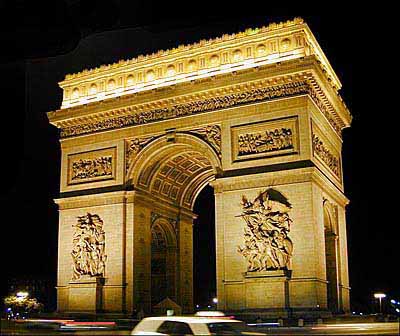
Frances Alda, a contemporary of Nellie Melba, offers a rendition accompanied with an orchestra. Her take on the song is quite passionate, as befitting a soprano who sang against Caruso. Her treatment of the line Cette âme adorable des lys? is especially interesting, her portamento turning the phrase into a musical equivalent of Arc de Triomphe. She also used a similar ornament each time the phrase ends on the dominant from a higher note. She took the higher oppure in d'une vapeur surnaturelle, however she had to break the legato line in order to procure the top G#, which she held (which I do not condone in this music). Overall I find the heavy vibrato often emulates veristic singing which of course is the wrong approach in this music; however this may also be a problem with the recording technology.


Nellie Melba's voice sometimes confuses me. Her timbre, especially its lower register, is similar to Luisa Tetrazzini, but its mid-high and high register has a beautiful purity which is unique to her. It is interesting to compare her rendition to Alda's: Melba also applies the portamento like Alda, but not to the same extreme. She also took the higher oppure; while she also took a breath before surnaturelle her legato is more intact, on the other hand her G# was quite precarious and strained. Her take of the final two phrases (de béatitude | et de paix?) uses a form of voce bianca, perhaps she wishes to suggest wistfulness but I suspect its ability to project in a hall. I find Melba's version more congenial compared to Alda's, as she is more successful in conveying the mood of the piece.


Hugues Cuénod's rendition of the song appeared in an LP of Debussy songs produced in 1972. Hearing it one can hear the qualities which made Cuénod such a cult favourite: his timbre, which I could only describe as 'intense ardour', his immaculate French, and his thoughtful phrasing. Notice how he pauses on the first L'âme and his treatment of the phrases Des jours où tu m'enveloppais | d'une vapeur surnaturelle using one breath but clearly indicating where each phrase ends. There are issues, obviously: above E his intonation is suspect, and some of his descending phrases are quite blanche in comparison to others, for example L'âme douce. In my opinion Cuénod's interpretation is the most successful, as he managed to transmit the wistful longing in the poem in his singing; he did it very simply, by tapering off the extreme end of his phrases into a fil di voce, basically singing a mini-diminuendo every time.


Christopher Maltman sang this song as part of an all-Debussy recital CD in 2001. As a baritone, Maltman offers a different perspective. His phrasing is heavy, ponderous. His treatment of Où donc les vents l'ont-ils chassée is confusing: the score marks are tenuto, but he sang it in an asymmetrical way, stressing vent and rushing through l'ont-ils chassée. Perhaps he wished to mimic a gust, as his phrasing is quite suggestive of something billowing in the wind. Surprisingly he took the higher oppure, using voix-mixte to reach G#. I approve this choice as the setting is art song as opposed to an aria. As a baritone the natural richness of the voice helps in faite d'espoir, d'amour fidèle, but I find that the ponderous phrasing often gets in the way of the interpretation.


Sandrine Piau, a renowned French soprano specialising in Baroque and Mozart, sang Romance in a recital of Romantic French art songs released in 2006. Her voice is a slender lyric with a beautiful purity and homogeneity between the registers. I find her rendition a bit rushed tempo-wise. Her Des jours où tu m'enveloppais is very beautiful, which baffled me as to why her L'âme douce is so bland in comparison when both phrases begin with the same notes. I find her treatment of long phrases more successful than short phrases. Her take of the higher oppure to be least successful even in comparison to Altman's, because her high G# while being very secure, sounds to me like it suddenly appeared out of nowhere instead of being part of a phrase. It is interesting to note that Piau is able to convey the song's mood by her sheer timbre, which is quite suggestive of a young girl or even a boy-soprano with its purity and clean lines.


Philippe Jaroussky, the superstar French countertenor, released an album of French Romantic songs in 2006 to both uproar and admiration. He sang Romance a third lower than written. His diction is the best among the singers compiled here, but one may argue that such a small timbre may allow a greater oral space for diction than would a larger voice. His phrasing is exemplary and at points similar to Cuénod, for example the phrase Que j'ai cueillis dans le jardin. I don't know why but I find his vapeur surnaturelle to be extremely arousing. That said, his Faite d'espoir, d'amour fidèle is quite swamped by the piano, a case of the singer doing right and the pianist doing the opposite.

Sunday, September 11, 2011

#47 thoughts on "fenesta che lucive"

Fenesta che lucive is a gorgeous Neapolitan song which is credited to Bellini, because its accompaniment and style is quite similar to Ah! non credea mirarti from his La sonnambula. Some even alleges that the real situation is the reverse, that Bellini copies this song; that the words are from 12th century and the music are from the 15th century, and hence is older than Bellini by at least two centuries!

***

Feneste che lucive e mo nun luce
sign'è ca nénna mia stace malata
S'affaccia la surella e mme lu dice:
Nennélla toja è morta e s'è atterrata.
Chiagneva sempe ca durmeva sola,
mo dorme co' li muorte accompagnata.


Va' dint''a cchiesa, e scuopre lu tavuto:
vide nennélla toja comm'è tornata
Da chella vocca ca n'ascéano sciure,
mo n'esceno li vierme, oh! che piatate!
Zi parrocchiano mio, ábbece cura: na
lampa sempe tienece allummata.


Addio fenesta, rèstate 'nzerrata
ca nénna mia mo nun se pò affacciare
Io cchiù nun passarraggio pe' 'sta strata:
vaco a lo camposanto a passíare!
'Nzino a lo juorno ca la morte 'ngrata,
mme face nénna mia ire a trovare!


The light is no longer in the window:
is my beloved sick?
I ask her sister; she tells me:
"My sister is dead, and she lays in the earth.
She had cried much, alone in her sleep,
and now she lays with the dead."

"Go to the church, she lays in her coffin:
See if she would return for you,
if her breath is sweet, or
if she lies with worms." Oh! mercy!
Dearest Father, look after my beloved,
keep watch, and lit a flame for her.

Farewell window, stay closed
my beloved will not come there anymore.
I will no longer walk by you,
but rather I shall walk by the cemetery!
Until the day when I shall die
and rejoin my beloved in death.

***

It is a very dark and intense song. Originally it was set for high voices, but of course it may also be transposed down for lower voices. Most performances only utilise the first two stanzas of the lyrics. There are several examples of approaches in which this song may be sung.


Fernando de Lucia (1860 - 1925) used a lot of portamenti and rubato. He was not afraid to use the pure head voice (as opposed to voix-mixte); on the other hand his high notes were extremely thrilling when sung in full voice. Sensitive diminuendos abound. I find a few interesting choices of phrasing, for example the hesitancy of sign'è ca nénna mia stace malata, symbolising a lover's doubt and worry. It is hard to ascertain the timbre, but the technical prowess displayed does suggest a musician in full control of his instrument.


Carlo Buti (1902 - 1963) chose a faster tempo, reminiscent of story-telling type of Verdi of arias, e.g. Tacea la notte placida. His reading was more crisp rhythmically, providing a forward drive in the narration. He also approached the phrase Chiagneva sempe ca durmeva sola similar to de Lucia: a voix-mixte durmeva, followed by a staccato-ed sola. Buti provided an interesting choice in the ending: by going up an octave to a beautiful F in mezza-voce.


José Carreras (1946) performed this song in a Berlin recital in 1987. The timbre is undeniably very beautiful, but on ascending the scale a certain harshness creeps in. He did not held the high Fs; in fact the phrases Chiagneva sempe ca durmeva sola (which he repeats twice in place of Zi parrocchiano mio, ábbece cura) sounded rushed. He did however manage a beautiful D in mezza-voce just before the end.


Dmitri Hvorostovsky (1962) performed this song in a Moscow recital in 1990. Apparently this is a bis performance; the audience was so enthralled they demanded Mr. Hvorostovsky to repeat this song! I am quite baffled by his choices in the lyrics: it is in a mixture of the original Neapolitan dialect and standard Italian. He had been upfront about his lack of training in bel canto, so his interpretation is a bit pale in comparison to de Lucia and Buti. Nevertheless, baritones should stick together! His legato is impeccable, and the timbre is so innately attractive you'd forgive a lot of thing. His high Eb was a bit too closed, but perhaps it was to fit with the pall mood of the song.

Saturday, June 12, 2010

#14 why singers wake up late

Because they'll wake up with the squillo built in! As opposed to waking up earlier and having to warm up the voice and all, they wake up at 4 p.m. and lo and behold! they're ready for the stage!

Wednesday, June 9, 2010

#13 facial expressions in singing

Cecilia Bartoli. Kathleen Battle. Some times, Diana Damrau.

What do these three ladies have in common, besides being examples of perfection of vocal art in their respective fachs?

(SO-CALLED) EXCESSIVE FACIAL CONTORTIONS!

In fact, they at Parterre Box coined Bartolitis for such an occasion where a singer (usually a lady singer, but sometimes Tom Hampson falls to the axe also; weirdly, countertenors are never alleged of this crime - you'd thought with all that falsetto going around their faces would be a war zone) struggles with her cheeks and brows to emit a tone.

I was watching the divine Mag Kožená singing Più non si trovano at Youtube, when I scroll down and detected diatribes against her facial expressions. I don't know why, but these comments incurred a passion in me that I had to stop drawing Microbiology slides - which I have to send in tomorrow! Talk about conflict of interest.

FYI, I like Magda but not too much. Her voice has a kind of unstability that makes one always think it wants to veer everywhere but on pitch. Maybe it's the quick vibrato. Magda is like Debbie Voigt - mezzo version. But I acknowledge her artistry, her industrious talent and her musical scholarship. In the clip she displayed a certain amount of facility in her facial muscles, but not unpleasantly so. This incurred one comment that Her facial expressions ruin it... they're wayyy too distracting. 

The point here is not how the tone is produced. It is easy to forget that the main purpose of everything - technique, training, concentration etc - in Classical singing is to produce a legitimate tone. Beautiful or not, that is another matter altogether - Callas vs Tebaldi, anyone? - but the main purpose of every shit that they do is to produce a tone which responds to every whim of the singer, every beck and call of the score, and maybe a few extrapolated notes here and there. In other words, babeh, the end justifies all means possible.

According to the proper ideals of bel canto - I remember reading a book by an lady Italian pedagogist, who had direct links with the son of Manuel Garcia, Maria Malibran's daddy - the proper position of the lips in singing anything is in a smile. A smile! Tell me, is it proper for a Lucia to be smiling while she's singing the mad scene? She is supposed to be crazy, yes, but should you smile when you're singing Il fantasma, il fantasma? Tell me, is it proper for a Maria Stuarda to smile when she's screaming Meretrice, indegna oscena?

Maybe we should blame TVs and videos of live performance, where cameras and other paraphernalia of visual recording are practically shoved down the throats of singers. Long time ago, the only medium to experience this art was via the theater, where over a long distance any contortions of the face became blurred and the overall effect on the performance as a whole was thus minimal. Over TV, HD performances and DVDs however, even a flick of the jugular is magnified thousandfold, leaving one somewhat exhausted after 2 hours of staring at blowed-up cheeks, wrinkled forehead and oh Lord, beads of sweat, before one lauches into a cavatina.

What I want to say is, if a singer requires that his/her face be contorted in order to achieve a sonorous projection / a big acuti / perfect legato, why not? After all, Classical singing is the art of singing with one's all, from the crotch all the way to the scalp. And if a pursed up lips can help the soprano  a little to reach the high Eb, so what? And finally, who are we to question the artist, who are vessels of the sublime?